Trying2KnowMyself

joined 3 months ago
[–] Trying2KnowMyself@lemmy.ml 2 points 41 minutes ago

Oh noooo the slaver doesn’t like me catgirl-sob

[–] Trying2KnowMyself@lemmy.ml 5 points 1 hour ago (2 children)

Slavers will always make excuses for not condemning slavery.

[–] Trying2KnowMyself@lemmy.ml 1 points 2 hours ago

I’ve never posted here without linking an article and I haven’t been banned yet.

[–] Trying2KnowMyself@lemmy.ml 7 points 2 hours ago* (last edited 2 hours ago)

Country that still has slaves votes against condemning slavery

shocked-pikachu

[–] Trying2KnowMyself@lemmy.ml 17 points 2 days ago

Conservative debtslop

[–] Trying2KnowMyself@lemmy.ml 3 points 2 days ago* (last edited 2 days ago) (1 children)

What? Was this meant as a question to the OP?

This is an absolutely terrible fearmongering article about nothing that’s trying to sell austerity (except for when funding genocide).

[–] Trying2KnowMyself@lemmy.ml 14 points 2 days ago (3 children)

Conservative debtslop

[–] Trying2KnowMyself@lemmy.ml 5 points 2 days ago (8 children)

less operational budget available

For what? Did you read the article? They care about:

  • Federal employees
  • Medicare
  • Social Security
  • Comparing government budgets to household budgets

Seriously? These are the “productive” purposes that are problematic?

If these cranks actually cared about debt, they’d be proposing taxes on the rich and ending the MIC. The article is complete shit and doesn’t actually present any material change in the US debt posture or their ability to “pay” interest on their debt level.

[–] Trying2KnowMyself@lemmy.ml 7 points 2 days ago

Even without dollar hegemony, the USA is the issuer of dollars and could choose to print all of the money necessary to fully pay off their debt. They’re only interested in printing money to fund genocide, though.

[–] Trying2KnowMyself@lemmy.ml 7 points 3 days ago

doggirl-sweat They tricked me, they were all like “don’t you just really hate capitalism?” And I’m just like doggirl-tears and next thing you know they’re telling me they have better emojis than anyone and how can you possibly resist that? Next thing you know, they’ve convinced me that a dictatorship of the proletariat would be pretty cool doggirl-smart

[–] Trying2KnowMyself@lemmy.ml 16 points 3 days ago

Conservative debtslop

[–] Trying2KnowMyself@lemmy.ml 7 points 3 days ago (2 children)

Then the commies would win. Those authoritarian assholes want to end oppression and improve the global standard of living. Just imagine how much worse things would be for billionaires if the global south couldn’t be exploited.


Scientists in Brazil described a new-to-science species of poison dart frog last year. It was first found among the leaves of wild banana plants on a research expedition to the Juruá River Basin in the western Amazon in 2023.

The frog, around the length of a paperclip (14–17 millimeters, or 0.5-0.7 inches), is reddish-brown and blue on top, bright blue with black spots underneath, and has copper-colored legs. It was named Ranitomeya aetherea, in reference to the word “ethereal.”

“We attribute this name to one’s feeling of enchantment and delicacy when encountering these frogs, as if they were from outside this world,” the study’s authors wrote in the species’ description.

The species has only been found at one site, where it lays its eggs in the small pools of water that collect inside plant leaves. This remote habitat is largely intact, with no immediate threats from deforestation or wildfires, creating a shield of protection from human-led activities.

This is in stark contrast to most other amphibian species, 40% of which are threatened with extinction. However, researchers stressed that biopiracy — the illegal collection and trade of rare species — and climate change are still threats.

The frog’s exact toxicity is unknown, but the whole Ranitomeya family is known to be poisonous, with toxins on their skin and bright colors to alert would-be predators.

“We know it’s poisonous to those that try to prey on it,” lead author Alexander Mônico, a researcher at the National Institute for Amazonian Research (INPA), told Mongabay. “But for us it’s fine, we’re able to handle them with our bare hands. We just need to be careful about any cuts.”

The recently described Ranitomeya aetherea poison dart frog in the Brazilian Amazon. Image courtesy of Alexander Mônico.


cross-posted from: https://hexbear.net/post/8001312

Scientists in Brazil described a new-to-science species of poison dart frog last year. It was first found among the leaves of wild banana plants on a research expedition to the Juruá River Basin in the western Amazon in 2023.

The frog, around the length of a paperclip (14–17 millimeters, or 0.5-0.7 inches), is reddish-brown and blue on top, bright blue with black spots underneath, and has copper-colored legs. It was named Ranitomeya aetherea, in reference to the word “ethereal.”

“We attribute this name to one’s feeling of enchantment and delicacy when encountering these frogs, as if they were from outside this world,” the study’s authors wrote in the species’ description.

The species has only been found at one site, where it lays its eggs in the small pools of water that collect inside plant leaves. This remote habitat is largely intact, with no immediate threats from deforestation or wildfires, creating a shield of protection from human-led activities.

This is in stark contrast to most other amphibian species, 40% of which are threatened with extinction. However, researchers stressed that biopiracy — the illegal collection and trade of rare species — and climate change are still threats.

The frog’s exact toxicity is unknown, but the whole Ranitomeya family is known to be poisonous, with toxins on their skin and bright colors to alert would-be predators.

“We know it’s poisonous to those that try to prey on it,” lead author Alexander Mônico, a researcher at the National Institute for Amazonian Research (INPA), told Mongabay. “But for us it’s fine, we’re able to handle them with our bare hands. We just need to be careful about any cuts.”

The recently described Ranitomeya aetherea poison dart frog in the Brazilian Amazon. Image courtesy of Alexander Mônico.


cross-posted from: https://hexbear.net/post/8001312

Scientists in Brazil described a new-to-science species of poison dart frog last year. It was first found among the leaves of wild banana plants on a research expedition to the Juruá River Basin in the western Amazon in 2023.

The frog, around the length of a paperclip (14–17 millimeters, or 0.5-0.7 inches), is reddish-brown and blue on top, bright blue with black spots underneath, and has copper-colored legs. It was named Ranitomeya aetherea, in reference to the word “ethereal.”

“We attribute this name to one’s feeling of enchantment and delicacy when encountering these frogs, as if they were from outside this world,” the study’s authors wrote in the species’ description.

The species has only been found at one site, where it lays its eggs in the small pools of water that collect inside plant leaves. This remote habitat is largely intact, with no immediate threats from deforestation or wildfires, creating a shield of protection from human-led activities.

This is in stark contrast to most other amphibian species, 40% of which are threatened with extinction. However, researchers stressed that biopiracy — the illegal collection and trade of rare species — and climate change are still threats.

The frog’s exact toxicity is unknown, but the whole Ranitomeya family is known to be poisonous, with toxins on their skin and bright colors to alert would-be predators.

“We know it’s poisonous to those that try to prey on it,” lead author Alexander Mônico, a researcher at the National Institute for Amazonian Research (INPA), told Mongabay. “But for us it’s fine, we’re able to handle them with our bare hands. We just need to be careful about any cuts.”

The recently described Ranitomeya aetherea poison dart frog in the Brazilian Amazon. Image courtesy of Alexander Mônico.


March 20 is World Frog Day. Frogs and toads have inhabited Earth for hundreds of millions of years, but 40% of amphibians species are now at risk of extinction, according to the latest conservation assessments.

Every year, roughly 150 new amphibian species are described. But many are immediately listed as threatened or endangered due to habitat loss, disease and climate change.

“Some species may not even get named before they go extinct,” biologist Zeeshan Mirza told Mongabay in December 2025.

Over the last year, Mongabay’s reporters have covered pressing threats facing frogs in all corners of the world. Here are a few.

Rare galaxy frogs threatened by photo tourism in India

Seven rare galaxy frogs (Melanobatrachus indicus) disappeared from southern India’s Western Ghats rainforest after a small group allegedly spent four hours handling and photographing the animals, an anonymous informant reported.

Researchers studying galaxy frogs, named for their resemblance to a night sky, found overturned logs and trampled vegetation at the site where the frogs had lived among rotting wood and stones.

“These beautiful yet rare frogs are unlike anything else on our tiny corner of the universe,” K.P. Rajkumar, a Zoological Society of London fellow, told Mongabay reporter Liz Kimbrough. “This sad event is a stark warning for the consequences of unregulated photography.”

Endangered mountain yellow-legged frog reintroduced again in California

Conservationists released 350 endangered mountain yellow-legged frogs (Rana muscosa) into Bluff Lake in Southern California earlier this year.

The species was once highly abundant in the region, but in 2023, there were fewer than 200 adults, even following several previous frog releases produced through captive breeding.

Non-native rainbow trout have decimated the species. Climate-driven wildfires and drought paired with a chytrid fungus outbreak have made their survival in the wild even more difficult.

“I think for most species, we’re really hoping for recovery, right? But in this case, we’re trying to prevent extinction,” Debra Shier of San Diego Zoo Wildlife Alliance told Mongabay contributor Sean Mowbray. “We have to try everything in the conservation toolbox.”

Three ‘unassuming’ brown frogs described in Peru

Three new-to-science frog species were described in the remote Cordillera de Huancabamba in the northwestern Peruvian Andes: Pristimantis chinguelas, P. nunezcortezi and P. yonke.

Scientists behind the discovery found the species during a series of night expeditions between 2021 and 2024. They said satellite imagery from the area already showed habitat loss from fire, agriculture and cattle ranching.

“They’re small and unassuming, but these frogs are powerful reminders of how much we still don’t know about the Andes,” lead author Germán Chávez of the Peruvian Institute of Herpetology told Mongabay.


The Islamic Revolution Guards Corps (IRGC) has announced staging the 63rd wave of its ongoing retaliatory Operation True Promise 4 in the face of unprovoked American-Israeli aggression, targeting oil facilities associated with the United States in the region.

The latest phase took place on Wednesday, following recent attacks on Iranian energy infrastructure, the Corps' Public Relations Office said in a statement. Staged "with full force," the 63rd wave also came in retaliation for the martyrdom of Iran's Intelligence Minister Esmaeil Khatib and others during the aggression, it added.

The Corps denounced the “deceitful and lying enemy” for targeting the country's energy facilities.

By conducting the strikes, it added, the adversaries had also sought to exact revenge on the nation over the ongoing countrywide rallies it has been staging in support of Iran's Islamic establishment and in protest against the aggression.

'Attack on Iran's energy infrastructure took conflict to new stage'

"The Islamic Republic did not intend to expand the war to oil facilities and did not wish to harm the economies of friendly and neighboring countries," the IRGC said.

"However, with the enemy’s aggression against energy infrastructure, Iran has effectively entered a new stage of the conflict, and the necessity to defend the country’s energy infrastructure compelled a retaliatory strike against American-linked energy facilities."

Message to Iranian people

Addressing the nation, the IRGC declared, "Your brave sons in the Armed Forces immediately launched an offensive in response to the enemy’s malice, and through a heavy, targeted operation, set fire to a series of oil facilities considered to be American interests in the region.

The reprisal, it added, "inflicted damage proportional" to the one that had been imposed on the country.

Zionist targets

"As many as 80 military and military support targets" were struck in the southern and central parts of the occupied territories, including Rishon LeZion, Ramla, and Lod in the center; Eilat in the south; and Ramat Gan and Bnei Brak east of Tel Aviv, as well as Bat Yam and Holon south of Tel Aviv.

The targets lying in the south included a gathering of Israeli forces.

All targets were hit surgically using multi-warhead missiles and attack drones.

Warning to US, Israeli forces

The IRGC also issued a stern warning to the American-Zionist aggressors against repeating their strikes against the country's energy sites.

"If this is repeated, subsequent attacks on your energy infrastructure and that of your allies will not cease until total destruction, and our response will be far more severe than tonight’s strikes.”

Operation True Promise 4 began momentarily following the launch of Washington's and Tel Aviv's most recent bout of unlawful aggression towards the Islamic Republic late last month.

The reprisal has hit sensitive and strategic targets in the heart of the occupied territories, including those lying in the city of Tel Aviv, the holy occupied city of al-Quds, the occupied port of Haifa, Be'er Sheva, which serves as the regime's technological epicenter, and the Negev Desert.

American outposts across the region, including those based in Qatar, Bahrain, the United Arab Emirates, Kuwait, and Saudi Arabia, have also faced intense retaliation.


Penetrating the highly-advanced Israeli missile systems stationed across the occupied territories, Iranian missiles have inflicted heavy damage upon Tel Aviv, killing two settlers and wounding tens of others in the process.

Hebrew news outlets reported that since the early hours of Wednesday, Tel Aviv and its surrounding areas have been struck by Iranian missiles at least twice, while Israeli missile systems have been unable to intercept the incoming projectiles.

According to the news outlets, Iran’s massive missile and drone attacks resulted in the loss of electricity and evacuation of thousands of settlers in Tel Aviv and surrounding areas.

More than 4,000 settlers have been forced to evacuate, the reports said.

Israeli paramedics and first responders have been sent to eight areas across Tel Aviv while a major train station has been severely damaged, according to the reports.

The mayor of Tel Aviv said that because of the attacks, the movement of trains across and around Tel Aviv have been suspended until further notice.

Furthermore, several towns around Tel Aviv have lost electricity after being hit by Iranian missiles. Israel’s Channel 14 said two setters were killed when an Iranian missile hit the town of Ramat Gan, in the suburbs of Tel-Aviv.

In a statement on Wednesday, the spokesperson for Iran’s army said that in recent days the armed forces have been using highly-advanced weaponry which they had not used before.

“God’s willing, after the war, we will have a new order in the region, without the US,” he added.

In another statement, the Army said it targeted the Ben Gurion airport with drones where Israeli regime’s refueling airplanes were stationed.

In remembrance of the martyred soldiers aboard Dena destroyer, as well as martyr Ali Larijani, and martyr General Qolamreza Soleimani, the Army launched a flurry of drones towards Ben Gurion airport where the regime holds its refueling airplanes, it said.

The army also thanked the Iranian people for their glorious presence during the funeral ceremony of the Dena Destroyer sailors.

“It is the people’s support that encourages the brave personnel of the Armed Forces to continue their war against the US-Israeli aggression,” the statement added.

Meanwhile, Australia’s Ministry of Defense said the al-Menhad military base in the United Arab Emirates (UAE), where Australian armed forces have a strong presence, have been targeted and damaged by Iranian missiles.

The Iranian Armed Forces have been attacking Israeli targets across the occupied territories and US bases across the region since February 28, after the US and Israel attacked several locations across Iran, assassinating several high-ranking officials, including Leader of the Islamic Revolution Ayatollah Seyyed Ali Khamenei.

According to Iran’s Ministry of Defense, Iranian forces have killed at least 600 American troops at various US bases since the start of the imposed war.


Bullets:

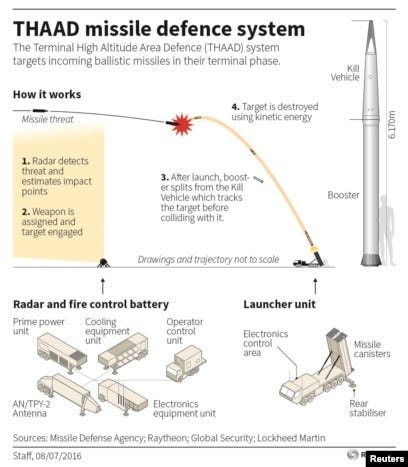
The TPY-2 radars are part of the THAAD missile defense system, and identify and direct allied air defenses against inbound ballistic missiles.In the early days of the war, Iranian forces targets the radars, knocking out at least four, across four countries.Raytheon (RTX) is the Pentagon contractor for the TPY-2 radars, which cost $500 million each, and feature a Gallium-Nitride populated array. China has a monopoly on the production of gallium, with 98% of the world's total. China also has export bans on its gallium to weapons makers, including Raytheon.

Inside China / Business is a reader-supported publication. To receive new posts and support my work, consider becoming a free or paid subscriber.

Report:

Good morning.

In the earliest days of the war, Iranian forces launched drone and missile attacks against strategic radars across the Persian Gulf region. These radar installations are crucial in air and missile defense, and serve as a theater-wide warning system. The THAAD system is Terminal High Altitude Area Defense, and identifies and engages incoming ballistic missiles.

Obviously this system is reliant on radars to make that all work, and Iran is knocking out those radars. At an Air Force Base in Jordan, a TPY-2 radar was hit, and those come with a $500 million price tag. That’s just for the radar, plus the cost of the missiles, which are useless without that radar. Another attack took out a radar in Saudi Arabia. And two others in the UAE and Qatar.

A replacement radar is being hurried over to Jordan to replace the one blown up there, and further down the Wall Street Journal points out that another race is on to finish the war in Iran before stockpiles of interceptor missiles run out.

From the start of this channel we have pointed out that the supply chains for the Pentagon all run through China. Literally not a single weapons platform or strategic asset gets built without rare earth metals, and China has monopolies on almost all of them. What’s more, China has dual-use export bans, that expressly forbid their sale to companies that are building weapons. All the Pentagon contractors, in other words, cannot source raw materials from Chinese companies.

The TPY-2 radars are built by Raytheon, and are scarce. This is a press release from Raytheon from last May, 2025, after the company delivered just the 13th TPY-2 radar, and which was the first such delivery to the US Missile Defense Agency.

So in the first few days of the war, Iran took down at least four of them. The system is a Gallium Nitride populated array system. Gallium Nitride allows for longer range and surveillance capability.

China has a monopoly on the production of gallium. 98% of the global production of gallium comes from here, while the United States is 100% dependent on imports. So these radar systems that are being blown up by Iranian drones and rockets, cannot be replaced until China relaxes those export bans to weapons makers.

A caveat here, because this is a common point of confusion: China previously had hard bans on all exports of gallium, germanium, and antimony. But as part of the trade deal with the Trump Administration, that restriction was removed, last November. But exports from China to weapons makers, and to companies on the dual-use export control list—those stay.

This is to say that some Western civilian manufacturers can import these metals, including gallium. But weapons makers cannot: Raytheon is one of the companies on that list. China’s “Unreliable Entities List” includes top Pentagon contractors, like Lockheed Martin, General Dynamics, and Raytheon, and those companies are banned from importing from China. So all these radars that got blown up in the first two weeks -- $2 billion so far and counting just for the THAAD system radars -- they’re gone forever.

Be Good.

**Resources and links:**China’s rare-earth mineral squeeze will hit the Pentagon hardhttps://www.defenseone.com/threats/2025/04/chinas-rare-earth-mineral-squeeze-will-hit-pentagon-hard/404776/RTX's Raytheon delivers 13th AN/TPY-2 radar for the U.S. Missile Defense agencyhttps://www.rtx.com/news/news-center/2025/05/19/rtxs-raytheon-delivers-13th-an-tpy-2-radar-for-the-u-s-missile-defense-agencyTerminal High Altitude Area Defense Radar Successful in Integrated Flight testhttps://raytheon.mediaroom.com/index.php?s=43&item=667The US military needs Chinese semiconductors to build advanced weapons. Not the other way around.

Presidential Document: Addressing the Threat to the Domestic Supply Chain From Reliance on Critical Minerals From Foreign Adversaries and Supporting the Domestic Mining and Processing industrieshttps://www.federalregister.gov/documents/2020/10/05/2020-22064/addressing-the-threat-to-the-domestic-supply-chain-from-reliance-on-critical-minerals-from-foreignChina suspends ban on exports of certain metals used in chip and electronics manufacturing to the u.s.https://www.cnbc.com/2025/11/09/china-suspends-ban-on-exports-of-gallium-germanium-antimony-to-us.htmlCritical Minerals and Defence technologieshttps://www.sfa-oxford.com/knowledge-and-insights/critical-minerals-in-low-carbon-and-future-technologies/critical-minerals-in-defence-and-national-security/Radar Bases Linked to US THAAD Systems Hit in Jordan, Saudi Arabia and uaehttps://politicstoday.org/radar-bases-linked-to-us-thaad-systems-hit-in-jordan-saudi-arabia-and-uae/U.S. Rushing to Replace ThAAD Radar in jordanhttps://www.wsj.com/livecoverage/iran-war-news-updates-2026/card/u-s-rushing-to-replace-thaad-radar-in-jordan-P764k4GQIjTocK36lHLr

Inside China / Business is a reader-supported publication. To receive new posts and support my work, consider becoming a free or paid subscriber.


From Inside China / Business via this RSS feed


Israel informed the US this week that it is running critically low on ballistic missile interceptors as the conflict with Iran rages on, US officials told Semafor.

Israel had reportedly entered the current war already low on interceptors that were fired during last summer’s conflict with Iran. Israel’s long-range defense system has strained under Iran’s attacks; CNN reported that Iran was adding cluster munitions to its missiles, which may exacerbate the depletion of the stock.

The US has been aware of Israel’s low capacity for months, one US official said: “It’s something we expected and anticipated.”

This official emphasized to Semafor that the US is not running similarly low on interceptors of its own. That comment comes amid broader concerns about interceptor depletion from a longer military engagement in Iran leaving the US in a poor position.

It’s also unclear whether the US might seek to sell or share any of its own interceptors with Israel, which would pose its own strain on domestic supplies. The US has included missile defense assets in past provisions of military aid to Israel.


“We have all that we need to protect our bases and our personnel in the region and our interests,” the US official said, adding that Israel is “coming up with solutions to address” their shortage.

Israel has other ways to defend against Iranian missiles during the war, including via fighter jets, but the interceptors are among the most effective defensive weapons against long-range fire. Its Iron Dome missile defense system is designed to repel more short-range fire.

President Donald Trump said earlier this month that the US has a “virtually unlimited” munitions stockpile, although analysts have long said US stockpiles are lower than the military would like.


Last June, the US fired over 150 THAAD interceptors during the 12-day war with Iran, the Center for Strategic and International Studies found — believed to be around a quarter of US inventory at the time. The US is also believed to have used around $2.4 billion worth of Patriot interceptors in the first five days of this war, according to some reports.

In January, the Pentagon made moves to begin substantially increasing its production of the THAAD missile defense system. The US official said that the administration has plenty of THAADs and fighter jets, as well as mid-level interceptors.

Chief Pentagon spokesman Sean Parnell told Semafor in a statement that the department “has everything it needs to execute any mission at the time and place of” Trump’s choosing.


In a statement after publication of this story, White House press secretary Karoline Leavitt told Semafor that US stockpiles are “more than enough” to achieve Trump’s goals against Iran “and beyond.” She added that Trump is also always “focused on strengthening our Armed Forces and he will continue to call on defense contractors” to quickly build US-made weapons.

“The United States Military’s accomplishments alongside the Israel Defense Forces speak for themselves — Iranian drone attacks are down 95 percent, ballistic missile attacks are down 90 percent, and the regime’s dismal situation will only get worse,” she said.

The Israel Defense Forces did not immediately respond to requests for comment from Semafor.


Arvoreznha, Brazil — Meet the admirable red-belly toad — a tiny amphibian found nowhere else on Earth but a small forest patch in southern Brazil. Don’t let its size fool you.

In 2014, it made history by halting the construction of a hydroelectric dam that would have wiped out its only home.

With just over 1,000 individuals left in the wild, the species is listed as critically endangered. In addition to climate change, the little toad suffers from the advance of agriculture and the threat of wildlife trafficking.

But this tiny hero doesn’t shy away from a challenge. In 2024, catastrophic floods swept through southern Brazil, submerging entire landscapes — including the fragile habitat this little survivor depends on. Did it make it through? Or was this finally too much? Michelle Abadie, a researcher who has been studying the species for more than 15 years, went to the field to find out. Mongabay joined her on this mission to discover why even the smallest creatures can have an outsized impact.

Curious to see what happens next? Press play.


This tiny toad stopped a giant dam. Then historic floods hit.

The video is about 6’30” long. The post also contains a transcript which I haven’t copied here.


It is precisely the discourse of “authoritarian repression”—deployed at the historical moment when the Islamic Republic of Iran is fighting a war for national survival—that reveals the material function of imperial feminism. The language of women’s rights reaches its highest pitch not during decades of sanctions, assassinations, and economic strangulation, but at the moment when the state targeted for destruction is mobilizing to defend itself—and its people—from military aggression.

Greg Shupak documents the logic openly at work in U.S. media. Leading newspapers such as the New York Times and Washington Post advocate bombing Iran while presenting military force as a means to “help” Iranian protesters and “free” them from “bondage” (Shupak, 2026). The discourse of authoritarian repression becomes the ideological cover for imperial violence. Outrage over the Iranian government’s actions is converted into justification for the U.S. government to inflict more violence on Iran—a formula for devastation presented as solidarity.

What does ‘opposing authoritarianism’ mean materially?

Abstract invocations of “authoritarian repression” detach a legitimate analytical category from the historical structure in which it operates. Once severed from the reality of imperial war, the concept becomes politically functional: it legitimizes the destruction of the very institutions capable of organizing collective defense.

The contradiction becomes visible when we ask a simple material question: what is the actual alternative being offered? Those invoking the language of liberation from positions of imperial power have supported authoritarian client regimes across the region for decades—from the Shah to the Gulf monarchies to Israel’s apartheid state. What does it mean for supposedly radical or revolutionary figures and organizations to wield the same discourse?

The question imperial feminism cannot answer is straightforward. Is there a concrete political force capable of taking power in Iran while simultaneously defending the country from U.S. and Israeli aggression? Since February 28, no such force has appeared on the ground.The current opposition promoted in Western media is not a liberation movement but a restoration project aligned with the very powers conducting the bombing. Voices opposed to “authoritarianism” celebrated abroad possess neither a mass base among Iranian workers nor the institutional capacity to defend Iran’s national sovereignty at this critical moment.

The outcome of such politics is already visible elsewhere. Where sovereign states have been destroyed under the banner of liberation, the result has not been democracy but devastation. History has shown this repeatedly—from Iraq to Libya to Syria. The collapse of the state exposes the population to fragmentation, militia rule, and foreign domination.

The ground refuses abstraction

Events on the ground tell a different story.

Consider what Professor Mirandi reported just days ago: when the bombs fell on Tehran—while thousands filled the squares to mourn and protest the U.S.-Israeli attacks—the crowd stood still. No one panicked. No one ran in fear. That stillness was not passivity. It reflected the political knowledge of a people who understand a fundamental truth: their survival—and any possible future freedom—requires defending their sovereignty against the empire that seeks their destruction.

These Iranians refuse the false equivalence imperial feminism insists upon. They reject the demand that while U.S. and Israeli bombs are falling, one must balance opposition to “authoritarian repression” with opposition to imperial war—as if these were symmetrical moral choices rather than a life-and-death struggle for national existence.

The South Pars workers demonstrated the same clarity. As Iranian scholar Helyeh Doutaghi documented through fieldwork during the December 2025 protests, when workers struck against wage theft and exploitation, they did not attack the legitimacy of domestic security institutions. They recognized that in a nation subjected to decades of sanctions, assassinations, and foreign-backed destabilization, doing so would play directly into the hands of those seeking to justify external intervention (Doutaghi, 2025). Their struggle for better conditions was inseparable from their defense of national sovereignty. They understood what imperial feminism cannot: that the state imperialism seeks to destroy remains the indispensable terrain on which any future working-class victory must be won.

Material reality of imperial war and international solidarity

When a nation is under siege, the survival of the population becomes bound to the survival of the state. That is not a matter of opinion but of political gravity. The structural logic of imperialism targets sovereign institutions precisely because in times of war they are the only force capable of organizing collective defense.

The human cost falls overwhelmingly on the working class. When sanctions block medical supplies, when infrastructure is bombed, when scientists and engineers are assassinated, those who suffer and die are the ordinary men and women whose liberation imperial feminism claims to champion. The destruction of sovereignty does not free them. It kills them.

Solidarity begins with recognizing the conditions people actually face. Do Iranian women need more sanctions? More bombs? More destabilization carried out in their name? Or do they need the violence of imperialism to stop so that their own struggles—against internal repression and external domination alike—can unfold on their own terms?

The people gathered in Tehran’s squares have already answered.

Defending sovereignty in the face of imperial war does not imply endorsement of every internal policy of the Islamic Republic. It reflects a simpler political reality: without sovereignty, there is no terrain on which struggles for democracy, workers’ rights, or women’s liberation can occur.

Imperial feminism obscures this reality by converting legitimate grievances into ideological instruments of war. Military aggression is then reframed as humanitarian intervention. When bombs are falling, the discourse of “authoritarian repression” does not liberate. It provides moral cover for the forces inflicting the violence.

The abstraction costs nothing to those who deploy it from afar. For those living under sanctions and airstrikes, the cost is measured in lives .Under conditions of siege, the survival of the people and the survival of the state are inseparable. Pretending otherwise is not nuanced analysis. It is complicity disguised as solidarity.

Solidarity with Iranian women therefore requires refusing to let their struggles be weaponized for imperial ends.

References:

Doutaghi, H. (2025, January 6). Iran’s Indigenous Labor Movement and Working Class Sovereignty. Progressive International. https://progressive.international/blueprint/e57562a0-4dbd-479f-b77d-ed23bee16394-irans-indigenous-labor-movement-and-working-class-sovereignty/en/

Marandi, S. M. (2026, March 8). Iran rejects ceasefire – demands new status quo[Interview]. Interview by G. Diesen. YouTube. https://youtu.be/0bjW0uh1J60

Shupak, G. (2026, February 10). Leading Papers Call for Destroying Iran to Save It.https://fair.org/home/leading-papers-call-for-destroying-iran-to-save-it/

The post Imperial feminism in a time of war appeared first on Bulatlat.


From Bulatlat via This RSS Feed.


The tiny Amazon molly (Poecilia formosa) has always fascinated researchers because, according to the rules of evolution, it shouldn't have survived as a species, let alone thrive as a species for over 100,000 years. Using advanced genetic mapping and comparison techniques to track how the Amazon molly's DNA has changed over time, a new study set out to uncover the genetic secrets behind this apparent rebellion against evolutionary theory.

The molly undergoes asexual reproduction and gives live birth to its young, which are its clones, because the species is made up entirely of females—much like the all-female Amazonian warriors of Greek mythology, from whom it gets its name, not the Amazon Basin (where it doesn't live).

As per Muller's ratchet, a standard evolutionary theory, they should have gone extinct because clonal organisms accumulate harmful mutations over time due to a lack of genetic diversity.

The genetic evidence from this study, published in Nature, shows that the Amazon molly picks up mutations faster than its sexual relatives, yet somehow avoids the expected genetic decay—the secret behind this surprising act of resilience is gene conversion. This process purges harmful mutations by spotting damaged genes, "copying" a healthy version of the same gene from another part of the fish's own DNA, and "pasting" it over the faulty region to overwrite the mistake.

Gene conversion slows Muller's ratchet, facilitating both positive and negative selection. Credit: Nature (2026). DOI: 10.1038/s41586-026-10180-9. www.nature.com/articles/s41586-026-10180-9

Accidental origin of the species

The Amazon molly didn't slowly evolve into a new species, it was the result of a 100,000-year-old accident. A long time ago, near Tampico, Mexico, a female Poecilia mexicana mated with a male Poecilia latipinna and created the hybrid—the Amazon molly. Every fish of that species alive today traces its lineage back to that single cross.

Unlike hybrid animals like a liger or mule, which are sterile and cannot reproduce, the Amazon molly is fully capable of reproducing asexually. Inside the mother's ovaries are specialized cells that undergo a modified version of meiosis—a type of cell division in sexually reproducing organisms—where the pairing up of chromosomes from two parents and swapping genetic information before dividing doesn't occur.

Instead, the mother produces eggs that already contain a full, double set of DNA that develops into new fish that are genetically identical to the mother. This form of cloning is called apomixis.

For a long time, scientists believed sexual reproduction was essential for long-term survival because it shuffles genes, removing harmful mutations and combining beneficial ones. The Amazon molly, however, gets the same advantages without ever mating.

Previous studies hinted at its high genetic diversity and signs of gene conversion, but detailed, haplotype-resolved genomic data were still missing.

Origin and phylogeny of the Amazon molly P. formosa. Credit: Nature (2026). DOI: 10.1038/s41586-026-10180-9. www.nature.com/articles/s41586-026-10180-9

Clues hidden in the genetic code

In this study, the researchers filled in this knowledge gap by creating a highly detailed and complete map of the entire genetic code for the Amazon molly and its two parent species using advanced long-read sequencing technology.

The researchers combined Hi-C and trio-binning to unravel the Amazon molly's genome. While Hi-C showed how DNA folds into chromosomes, trio-binning separated the two parental DNA sets, letting them study each lineage independently.

They found widespread presence of gene conversion, which supports two different pathways to reverse or correct unwanted genetic mutations: adaptive, or positive, selection, which promotes beneficial genetic mutations that enhance an organism's fitness, and second is purifying, or negative, selection, which helps reduce the presence of harmful genetic variations within a population.

The team also observed a higher rate of genetic repairs happening near DNA that carry crucial biological instructions, such as immunity or cell signaling.

Another fascinating detail revealed by the genome map was that out of the two sets of DNA present in the Amazon molly, one from each ancestral parent, is that the P. mexicana half of the fish's DNA is mutating and changing faster than the P. latipinna half, with changes mirroring those happening to the original species in the wild.

The study sheds light on long-debated questions about the evolutionary costs of asexual reproduction and establishes gene conversion as a powerful mechanism for effectively offsetting the negative effects. The findings give rise to a new question for future studies to explore: Do other long-lived asexual species avoid Muller's ratchet through the same process or is there something completely different at play?


A tropical insect has been found to change color from vivid hot pink to green within a fortnight, which scientists believe may mimic the young leaves of rainforest plants. The findings, published this week in the journal Ecology, focuses on Arota festae, a leaf-masquerading katydid also known as a "bush cricket," native to Panama, Colombia and Suriname.

When researchers spotted an adult female beneath a light at the Smithsonian Tropical Research Institute's field station on Barro Colorado Island, Panama, she was an unmistakable hot pink. Eleven days later, she was completely green.

Scientists from the University of St Andrews, University of Reading, the Smithsonian Tropical Research Institute, and University of Amsterdam, propose that the pink coloration evolved to mimic "delayed greening," a phenomenon in which newly emerged tropical leaves flush vivid shades of pink or red before maturing to green.

On Barro Colorado Island, around one-third of plant species show this trait all year, providing a reliable supply of pink leaves for a camouflaged insect to blend into.

Lead author Dr. Benito Wainwright, of the University of St Andrews, said, "Finding this individual was a genuine surprise. Because it was so rare, we kept it in natural conditions and found it changing color from hot pink to green.

"Rather than a bizarre genetic quirk, this may actually be a finely tuned survival strategy that tracks the life cycle of the rainforest leaves this insect is trying to resemble."

A green Arota festae after transformation. Credit: University of St Andrews, University of Reading, the Smithsonian Tropical Research Institute, and University of Amsterdam.

The team reared the individual in captivity for 30 days, photographing her daily. The hot pink faded to pastel after four days, and by day eleven, she was indistinguishable from the common green morph.

She survived to mate before dying naturally the following month.

Pink katydids have been documented in scientific literature since 1878 but were generally considered a rare, disadvantageous mutation. This appears to be the first recorded case of a katydid completing a full color shift within a single life stage.

Dr. Matt Greenwell, of the University of Reading, a co-author of the study, said, "Tropical forests are extraordinarily complex environments, and this discovery hints at just how precisely some animals have evolved to exploit them.

"You would think that a bright pink insect in a mostly green forest would stand out to predators like a worker in a high-vis jacket. The idea that an insect might gradually shift color to keep pace with the leaves it mimics shows how dynamic the rainforest can be, and is a remarkable example of camouflage in action."

view more: next ›